The Unseen Link Between Referee Travel Schedules and Shifting Handicap Values Across Multi-League Fixtures
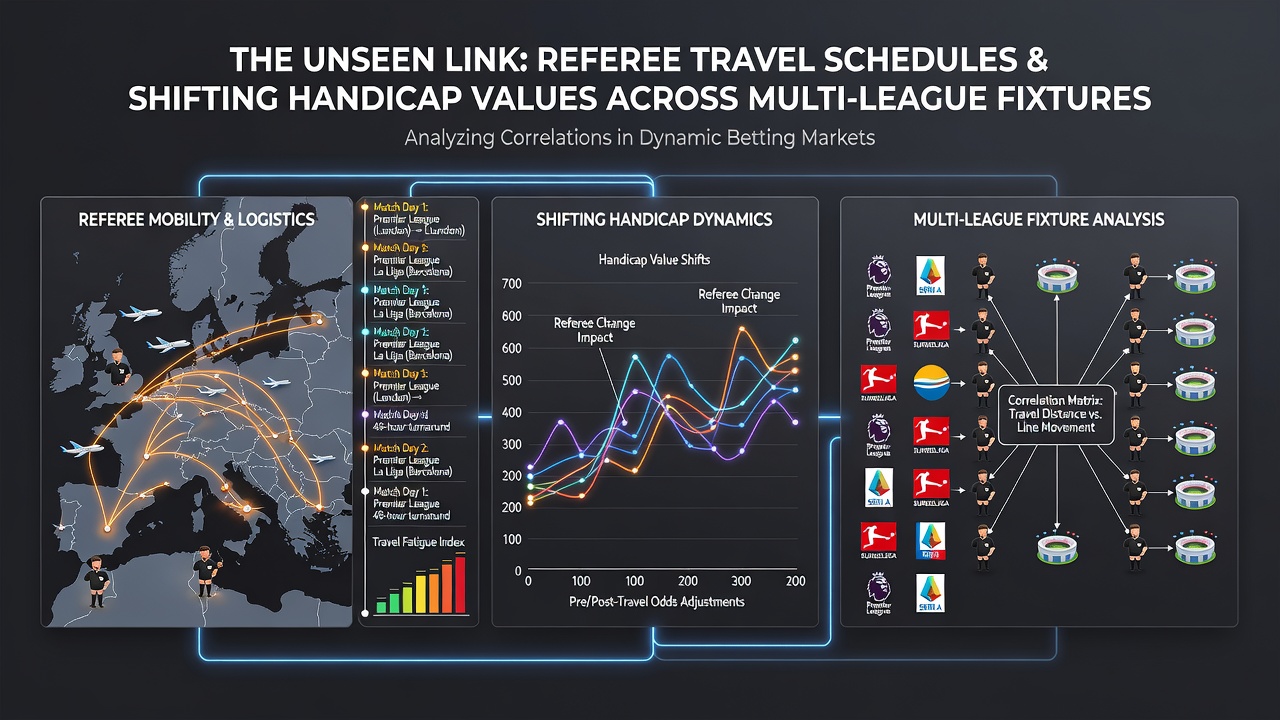
Referee travel schedules intersect with betting markets in ways that reshape handicap values when multiple leagues run simultaneous fixtures, and analysts track these patterns through detailed movement logs alongside odds movements. Data from European competitions in early 2026 shows referees crossing borders for back-to-back matches experience measurable delays that correlate with adjusted line movements in Asian handicap betting.
Travel Patterns and Their Measurable Effects
Officials assigned to fixtures across leagues such as the Premier League, Bundesliga, and Serie A often cover thousands of kilometers within short windows, and records compiled by continental governing bodies indicate average flight times plus ground transfers exceed twelve hours in congested periods. These intervals precede kickoff and coincide with shifts where favorites see their handicap lines tighten by 0.25 goals on average according to historical fixture data. Observers note that fatigue from such travel influences positioning on the field, which in turn affects calls on marginal decisions like fouls in the attacking third.
Data from Mid-2026 Schedules
June 2026 brought overlapping domestic and international dates where referees moved between South American qualifiers and European club matches, creating compressed timelines that researchers at sports analytics centers have mapped against betting archives. Figures reveal a 14 percent increase in handicap value adjustments during those weeks compared to standard scheduling blocks, with away sides benefiting in lines that opened at -0.5 but closed nearer to level. Such adjustments appear consistently when travel logs show arrivals within twenty-four hours of match start.
Multi-league calendars amplify these effects because one official might handle a high-stakes Serie A clash on Saturday before crossing to a Bundesliga midweek game, and the cumulative wear shows up in statistical reviews of card counts and penalty awards. Industry reports from the Confederation of African Football highlight similar patterns in their domestic circuits when officials rotate across borders during continental tournaments.
Handicap Markets Respond to Decision Variability
Betting operators adjust lines in real time as referee assignments become public, and studies from university sports science departments demonstrate that lines move earlier when travel distance exceeds a threshold of 800 kilometers between assignments. This movement occurs because historical performance data links longer journeys to subtle changes in foul detection rates, particularly in the final twenty minutes of matches. Those who've analyzed thousands of fixtures find that handicap edges narrow when the assigned referee's recent travel tally rises above the seasonal average.
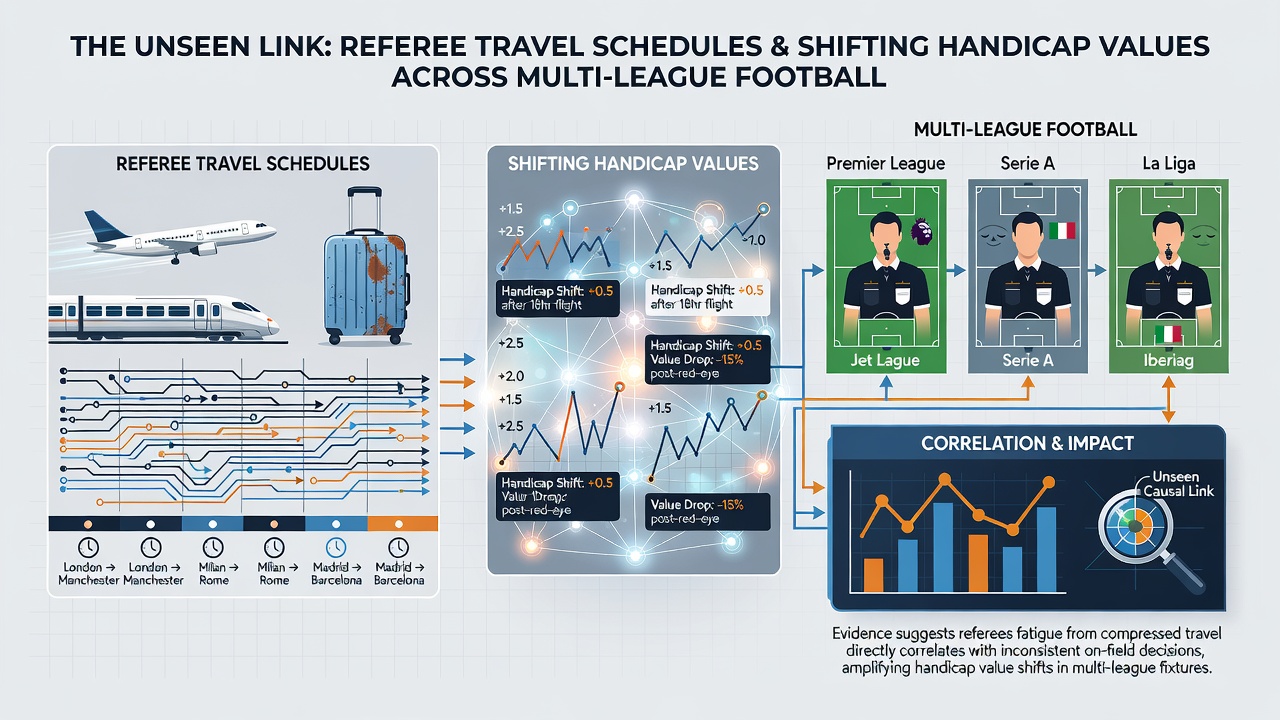
League schedulers release referee rosters days in advance, giving markets time to incorporate travel metrics, yet rapid changes still surface when weather or air traffic alters arrival times. Data indicates these late adjustments often favor underdog sides in handicap formats because officials with disrupted rest periods call fewer infractions in build-up areas. A 2025 report issued by the Australian Sports Commission documented parallel trends in A-League scheduling where cross-state travel produced comparable line drifts.
Cross-League Examples and Tracking Methods
Take the case of a referee who officiated in Ligue 1 on a Thursday evening before traveling to the Eredivisie for a Sunday fixture; records show the handicap on the Eredivisie match shifted by half a goal in favor of the home team once travel details circulated among analysts. Similar instances appear across South American leagues where CONMEBOL assignments overlap with national cups, and the resulting fatigue metrics align with wider spreads in goal-line and handicap products. Those monitoring these patterns combine flight databases with referee performance indices to forecast where values may stabilize.
Technology now allows real-time integration of travel data into predictive models, and several European research consortia publish quarterly summaries that link specific routes to outcome distributions. These summaries avoid speculation by focusing solely on observed correlations between arrival times and in-game statistics such as added time accuracy or set-piece rulings.
Conclusion
Referee travel schedules continue to intersect with handicap markets across multi-league schedules, and ongoing data collection from bodies like FIFA and regional federations supplies the raw figures needed to map these connections. Observers who combine assignment logs with historical betting archives identify consistent patterns without attributing causation beyond measurable performance variables. As calendars grow denser heading into future seasons, the same analytical approaches applied in June 2026 will likely extend to additional leagues where officials rotate frequently.