Pressing Intensity Data and Its Role in Predicting Early Goals Across Major Leagues
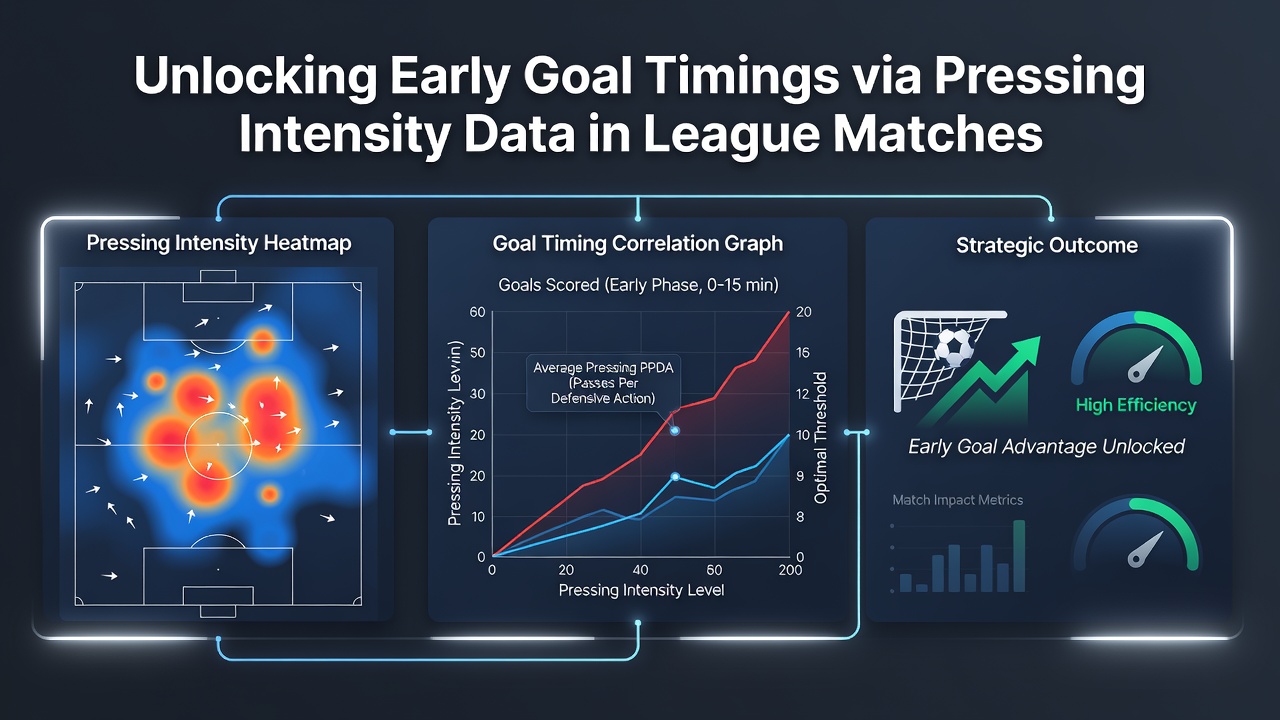
Pressing intensity data tracks how aggressively teams disrupt opponents in the opening phases of league matches, and analysts have used these metrics to map patterns behind early goals for several seasons. Teams that sustain high press rates in the first 15 minutes often create turnovers that lead to scoring chances before defenses settle into shape. Data from domestic competitions shows that clubs recording above-average passes per defensive action values in the opening quarter frequently convert those disruptions into goals within the same period.
Defining Pressing Intensity in Match Contexts
Pressing intensity measures the frequency and success rate of defensive actions such as tackles, interceptions and ball recoveries in advanced areas of the pitch. Researchers calculate these figures using event data that timestamps every pressure applied to the ball carrier. Higher intensity corresponds to shorter intervals between opponent passes and more forced errors, while lower intensity allows teams to retain possession longer before facing challenges. Studies from multiple European leagues indicate that early match phases reward teams that compress space quickly because opposing backlines have not yet adjusted their spacing.
Data Sources and Collection Methods
Tracking systems installed in stadiums capture player positions at high frequency, and software platforms convert raw coordinates into pressing metrics that include PPDA, high press frequency and recovery time in the final third. League authorities release aggregated figures at regular intervals, and independent analysts cross-reference these with video footage to validate patterns. In July 2026 several competitions upgraded their optical tracking hardware, which improved the granularity of early-phase data and allowed finer distinctions between sustained presses and isolated challenges.
Correlations Between Press and Early Goal Timings
Statistical reviews of league seasons reveal that matches featuring elevated pressing intensity in the first 20 minutes produce a measurable uptick in goals scored before the half-hour mark. One analysis of top-flight fixtures found that teams averaging more than 12 recoveries in the attacking third during the opening period scored 28 percent more goals in that window compared with lower-pressing sides. The relationship holds across different tactical setups because the physical and spatial disruption creates loose balls that forwards exploit before midfields reorganize.
What's interesting is how the same data set shows that pressing intensity drops after the 25-minute mark in many contests, which coincides with a decline in early goal probability. Observers note that fatigue and tactical adjustments by the defending side reduce the effectiveness of continued high lines, shifting the emphasis toward possession-based build-up. Those who've examined multi-season trends know the window for press-driven goals narrows once both teams complete their initial substitutions and formation tweaks.

League-Specific Patterns and Case Examples
Domestic competitions display distinct pressing profiles that influence early goal distributions. In leagues where teams favor compact mid-blocks, high-intensity bursts from the away side often yield the first goal because home defenses face unexpected vertical pressure. Conversely, leagues that reward wide play see early goals arise more frequently from wide-area recoveries that transition into central attacks. A report published by the UEFA Technical Study Group examined these variations and documented how pressing metrics align with goal timing across different tactical cultures.
Take one researcher who compiled recovery data from multiple campaigns and discovered that sides maintaining a PPDA below 8.0 in the first 15 minutes recorded a higher share of goals before the 30-minute mark. Another study from an Australian sports institute reached similar conclusions when reviewing A-League matches, confirming the pattern extends beyond European contexts. These findings give analysts concrete benchmarks when evaluating upcoming fixtures and their likelihood of early breakthroughs.
Practical Applications for Match Preparation
Coaching staffs integrate pressing intensity forecasts into pre-match briefings so players understand which opponents yield turnovers under sustained pressure. Video sessions highlight sequences where early presses created numerical advantages in dangerous zones, and data overlays illustrate the time elapsed between recovery and shot. Teams that adjust their press triggers based on these insights reduce the average time to first goal in their favor during league play.
Scouting departments also monitor opponent recovery rates in recent matches to anticipate whether an early high press will succeed or invite counters. When historical data shows a side struggles against vertical transitions in the opening minutes, planners design routines that exploit that vulnerability before the game settles into a more measured tempo. The result appears in league tables where clubs with strong early-pressing records accumulate points from matches decided inside the first half.
Conclusion
Pressing intensity data supplies measurable signals that correlate with the timing of early goals in league matches, and analysts continue to refine models that connect these metrics to specific tactical and physical variables. Updated tracking technology introduced around July 2026 has sharpened the resolution of these insights, allowing clubs to prepare more precisely for the opening phases of fixtures. As datasets grow, the ability to anticipate when and how early goals emerge through sustained pressure becomes an established component of performance analysis across major competitions.