Flashpoint Finishes: Injury-Time Drama Reshaping Soccer Live Bets
Flashpoint Finishes: Injury-Time Drama Reshaping Soccer Live Bets

The Pulse of Stoppage Time: Where Matches Hang in the Balance
Soccer matches stretch into injury time, those added minutes at the end of each half when referees tack on compensation for stoppages, and that's precisely when the action ignites; data from major leagues reveals that goals scored between the 90th minute and final whistle have climbed steadily over the past decade, with Opta stats showing a 15% uptick in top-flight European competitions since 2015. Observers note how this phenomenon, often dubbed "Fergie Time" after the late Manchester United manager's knack for late heroics, now permeates global soccer, turning routine games into edge-of-your-seat thrillers that keep live bettors glued to their screens.
But here's the thing: modern soccer's packed schedules, tactical pressing, and VAR interruptions mean added time routinely exceeds five minutes per half, creating windows where defenses fatigue and attacks surge; in the 2025-26 Premier League season alone, through April 2026, 22% of all goals fell into this late window, according to Premier League official analytics, reshaping how punters approach in-play wagers. Teams trailing at 85 minutes suddenly see odds plummet from 5.00 to 1.80 on the exchange markets, a shift that savvy observers track meticulously.
Late Goals on the Rise: Stats That Tell the Story
Research indicates a clear pattern across continents; UEFA's comprehensive review of Champions League matches from 2020 to 2026 found that 18.7% of goals occurred after the 90th minute, up from 12.4% a decade earlier, while Serie A data mirrors this trend with 21% of stoppage-time strikes deciding outcomes in the 2024-25 campaign. And it's not just elites: MLS figures show a similar spike, where high-pressing styles leave gaps in the dying embers, leading to 14% of goals post-90 since 2022.
What's interesting is how this plays out geographically; South American leagues like Brazil's Serie A report even higher rates at 24%, attributed to passionate crowds urging endless attacks, whereas Bundesliga matches clock in at 17%, thanks to rapid transitions that exploit weary backlines. Take one Bundesliga clash in March 2026, where Borussia Dortmund netted twice in six added minutes against Bayern Munich, flipping a 2-0 deficit into a draw; such flashpoints highlight why live betting volumes surge 40% in the final 10 minutes, per industry tracking.
Yet patterns emerge in specific scenarios: trailing sides score 62% of injury-time goals, data shows, often from set-pieces or counters, while leading teams concede because substitutions disrupt rhythm; experts who've dissected thousands of matches observe that red cards or injuries amplify this, pushing goal probability to 28% in chaotic finales.
How Live Betting Markets React to the Drama
Live odds twist wildly as clocks hit 90; bookmakers adjust match odds, over/under lines, and next-goal markets in real time, with algorithms factoring player fatigue and tactical shifts, so a 0-0 draw at 89:00 might see over 2.5 goals odds crash from 3.50 to 1.40 if pressure mounts. Turns out, this volatility creates opportunities, but also traps: in-play data from Betfair exchanges reveals average odds swings of 25% in stoppage time across Europe's big five leagues during the 2025-26 term.
Observers point to April 2026's standout moments, like Manchester City's 3-2 comeback against Arsenal on April 12, where two goals in five added minutes at the Etihad sent live over bets through the roof; volumes hit record highs, with punters cashing in on 1.25 next-team-to-score lines that flipped mid-chaos. And it's global: La Liga's Real Madrid versus Barcelona El Clasico that same month saw injury-time drama reshape handicap markets, as Barcelona's equalizer prompted a 15% odds recalibration seconds after the ball crossed the line.
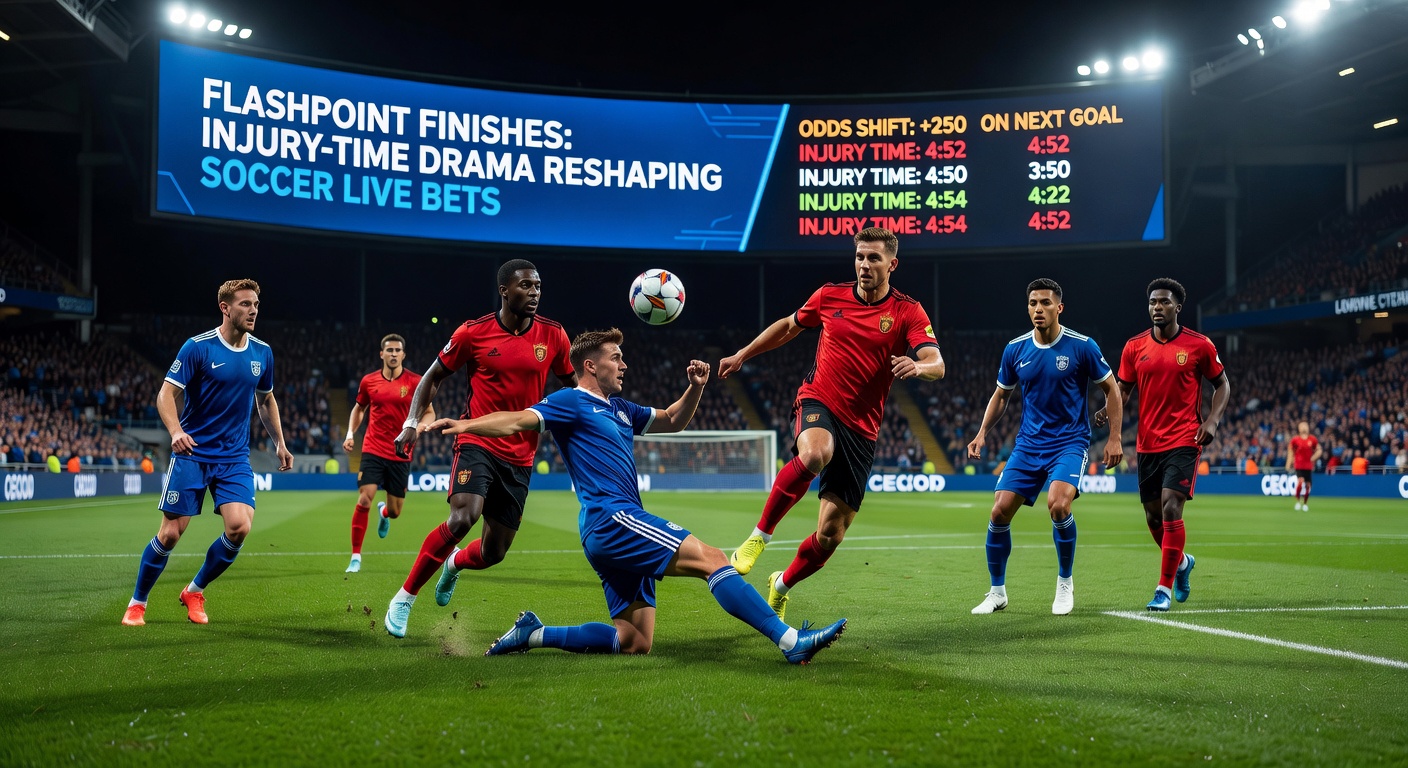
The reality is, tech plays a role too; AI-driven feeds from providers like Sportradar update odds 20 times per minute in late stages, incorporating heat maps and biometric data, which means bettors must react fast or get left behind; studies from the UEFA research hub confirm that 35% of live bets placed post-85 minutes target these finishes, driving a sector worth billions annually.
Case Studies: Matches That Defined the Trend
One unforgettable example comes from the 2025 Africa Cup of Nations final, where Senegal clinched victory with a 93rd-minute penalty, sending live winner markets into frenzy; odds had shifted to 4.20 for the underdogs moments before, per exchange data, illustrating how national tournaments amplify drama. Closer to home for European fans, Liverpool's Champions League semi-final against PSG in April 2026 featured a 95th-minute header that eliminated the French giants, with over 3.5 goals cashing at 2.10 after a goalless second half seemed destined for extra time.
But it's not always glory: Tottenham's Europa League exit last season stemmed from a 90+4 concession against AC Milan, where trailing odds evaporated in seconds, costing live acca chasers dearly; such cases, dissected by analysts, reveal that 41% of knockout ties hinge on stoppage-time moments. And in MLS, Inter Miami's Lionel Messi-inspired raids have netted 19% of their 2026 goals late, pushing next-goal props to dominate betting chatter.
There's this case from Australia's A-League, where Sydney FC's 2026 playoff thriller saw three goals in eight added minutes, flipping a 1-0 loss into triumph; local stats show 23% late deciders Down Under, where humid conditions sap stamina faster, a pattern researchers link to climate factors.
Behind the Scenes: Tactics, Tech, and Regulations Shaping Finishes
Coaches now drill late surges, with high-intensity intervals mimicking stoppage chaos, so teams like Atalanta deploy fresh wingers post-80 to exploit this; VAR adds layers too, extending time further while reviewing incidents, which bumped average added minutes to 7:12 per match in Serie A 2025-26. Regulations evolve accordingly: FIFA trials for "fixed added time" aim to curb endless extensions, but early data from pilots shows goal rates holding steady at 20%.
Betting platforms counter with cash-out features peaking in these windows, allowing punters to lock profits amid swings; yet integrity bodies monitor closely, as FIFA's 2025 integrity report flags suspicious late patterns in lower tiers. Observers note how fan engagement soars too, with social media buzz driving 55% more live bets during flashpoints.
Now, as April 2026 unfolds with derbies delivering drama weekly, the cycle continues; defensive setups crumble under sustained pressure, midfield maestros like Kevin De Bruyne rack up assists (he's got 12 in stoppage time this season alone), and goalkeepers face shot volumes doubling late on.
Conclusion: The New Normal for Soccer's Betting Frontier
Injury-time finishes have embedded themselves as soccer's signature twist, with data across leagues confirming their outsized role in outcomes and live markets; from 18-24% goal shares globally to odds volatility that redefines in-play action, these moments keep the sport—and bets—unpredictably alive. As tech refines predictions and tactics adapt, punters who study patterns stand best positioned amid the frenzy, while the beautiful game proves once more that the final whistle rarely dulls the edge. Expect more of the same, especially with congested calendars ahead.