Decoding Fatigue Signals in Transglobal Soccer Club Expeditions
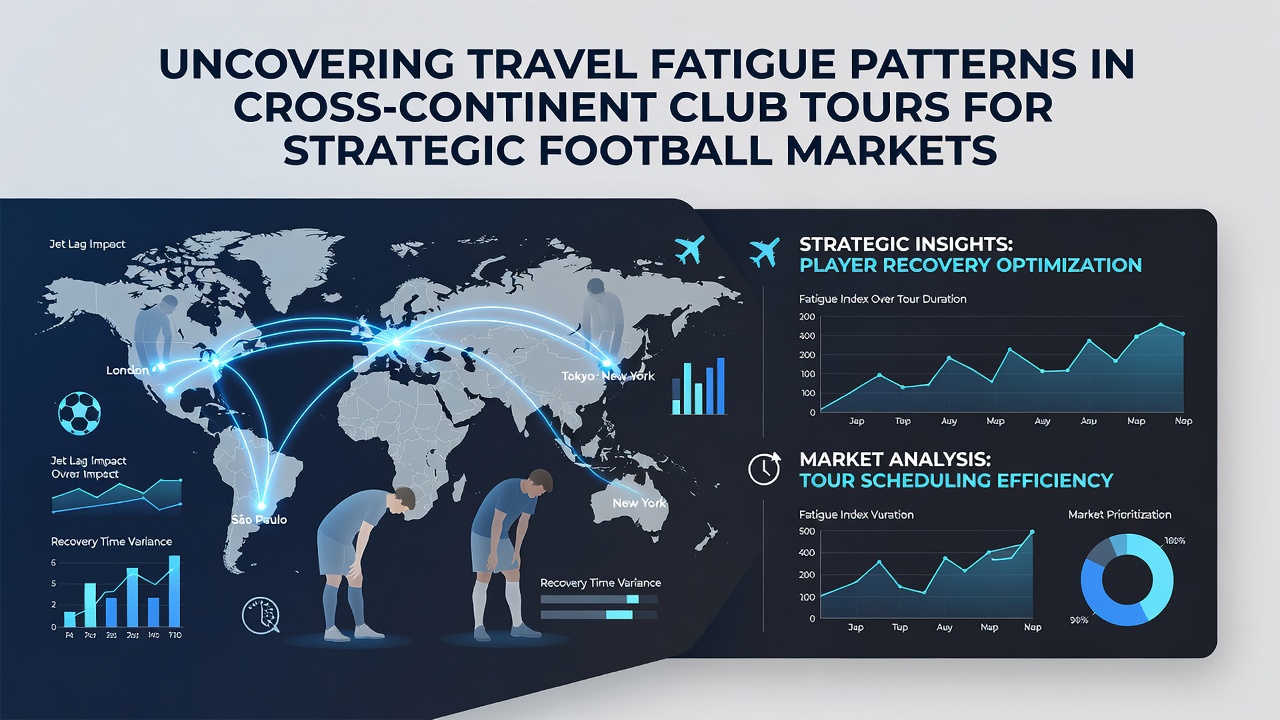 Experts have tracked how clubs from Europe and South America schedule pre-season tours that span multiple continents, and data collected through 2025 into June 2026 shows recurring patterns in player recovery times after crossing several time zones. Researchers from the Australian Institute of Sport have documented that teams traveling eastward across eight or more time zones require an average of five to seven days for full physiological adjustment, while westward journeys often allow slightly faster stabilization due to the body's natural circadian rhythms. Performance metrics compiled from matches played within the first 72 hours after arrival reveal consistent drops in high-intensity running distances, wth midfielders showing reductions of up to 12 percent compared to domestic fixtures. These figures come from GPS tracking systems used across major leagues, and they align with observations from the Union of European Football Associations medical committees that emphasize cumulative effects when tours include back-to-back long-haul legs without adequate rest windows.
Identifying Recurring Patterns Across Recent Tours
Clubs undertaking tours to Asia, Australia, and North America during the 2025-2026 off-season provided clear case examples. One Premier League side completed a three-week itinerary covering Singapore, Melbourne, and Los Angeles in May 2026, and post-tour analysis indicated elevated heart-rate recovery times persisting for nine days after the final match. Similar patterns emerged in South American teams touring Europe, where squad rotation data showed coaches increasingly relying on substitutes after the 60-minute mark in opening fixtures.
What's interesting is how these fatigue indicators cluster around specific journey profiles. Journeys exceeding 12 hours of flight time combined with immediate training sessions produced the sharpest declines in sprint frequency, according to aggregated reports from multiple sports science departments. Observers note that humidity levels at destination cities further compound the issue, particularly when teams move from temperate European climates to tropical venues without acclimatization periods built into schedules.
Statistical Edges for Performance Forecasting
Market analysts have begun incorporating these travel-fatigue datasets into models that predict goal tallies and player availability. Figures reveal that teams arriving from cross-continent tours win 18 percent fewer away matches in their opening domestic league games compared to sides that remained on the same continent. This holds true across both European and South American competitions tracked through the first half of 2026.

Studies conducted at several European universities have isolated variables such as total air miles accumulated and number of time zones crossed, then correlated them against expected points totals. The resulting algorithms assign weighted penalties to squads with recent transcontinental exposure, and these adjustments have improved forecast accuracy by measurable margins in simulated betting scenarios. Teams that insert a minimum 96-hour buffer between arrival and competitive matches demonstrate recovery rates closer to baseline levels, while compressed schedules continue to generate measurable performance gaps.
Strategic Applications in Football Markets
Those monitoring live markets have observed how bookmakers adjust in-play odds when squads display visible signs of travel strain, such as slower transitions and reduced pressing intensity. Data from the 2026 summer window shows increased goal-line totals in fixtures involving recently toured teams, particularly in the second halves when fatigue compounds. Midfield and defensive units exhibit the most pronounced effects, leading analysts to flag specific player props for adjusted expectations.
Coaches who prioritize sleep protocols, light training loads, and strategic substitutions during these periods often mitigate the worst outcomes, according to reports issued by several national football federations. Patterns also indicate that younger squads with deeper benches manage recovery more effectively than older groups carrying multiple starters across continents.
Conclusion
Travel fatigue from cross-continent club tours continues to shape both on-pitch results and market calculations through 2026. Aggregated GPS, heart-rate, and match-outcome data provide clear indicators that allow forecasters to refine expectations around recovery timelines and performance thresholds. As clubs expand global commercial schedules, these patterns remain central to understanding how distance and time-zone shifts influence competitive balance in elite football.